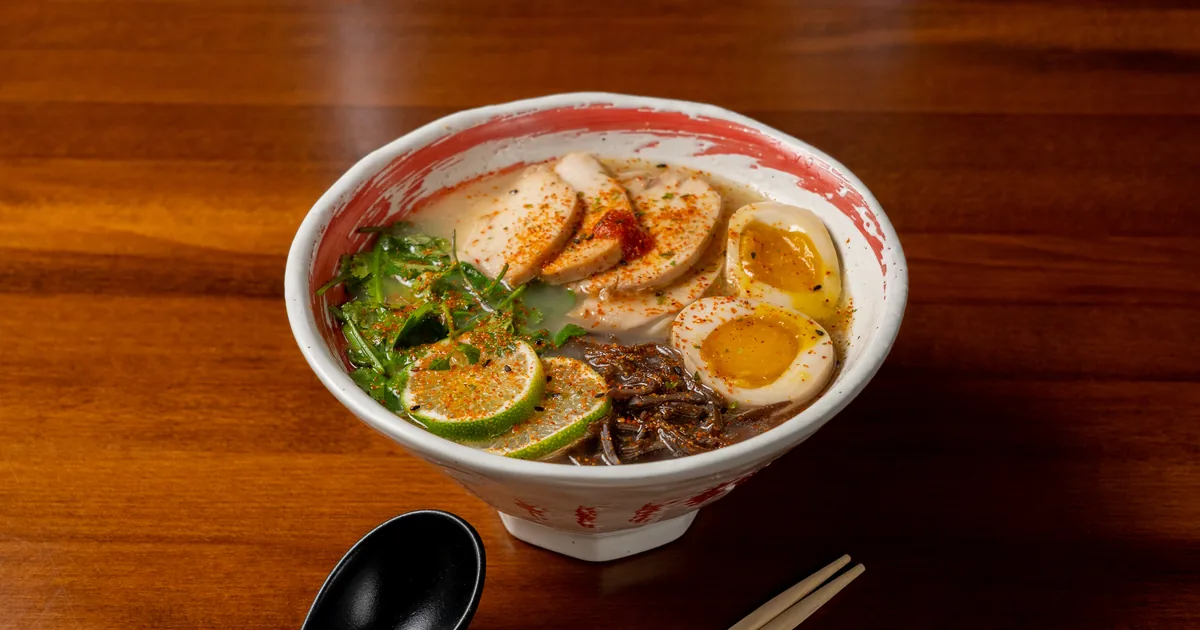
Bakudan's menu descriptions list out every topping in a bowl, which is useful once you know what the words mean and confusing if you don't. Here's a plain-English reference for the terms that show up most often.
Chashu
Braised, sliced meat — usually pork, though Bakudan also uses chicken chashu on several bowls. It's slow-cooked until tender and is one of the most common toppings across the menu.
Kikurage
A type of mushroom, sometimes called wood ear or cloud ear mushroom, with a slightly crunchy, chewy texture. It appears on bowls like Garlic Tonkotsu and Cilantro Lime Chicken.
Shio, Shoyu, Tonkotsu, and Miso
These are broth bases, not toppings. Shio means salt-based; shoyu means soy-sauce-based; tonkotsu refers to a pork-bone broth; miso means the broth is built around fermented soybean paste. Bakudan's bowls are often built on a combination — Cilantro Lime Chicken, for example, uses both a shoyu and shio base together.
Nori
Dried seaweed sheets, usually served folded on the side or edge of the bowl. It's the same seaweed used in sushi, just served differently here.
Togarashi
A Japanese seven-spice chili blend, used as a seasoning rather than a wet sauce. It shows up on bowls like Cilantro Lime Chicken and Spicy Shoyu as part of building heat and flavor.
Seasoned Egg
A soft-boiled egg marinated before serving, usually halved so the yolk is visible in the bowl. It's a standard ramen topping, not specific to any one Bakudan bowl.
Enoki Mushrooms
Long, thin, white mushrooms, distinct in appearance from kikurage. They appear on Spicy Shoyu specifically.
Why This Matters When You Order
Once you know what these terms mean, the menu descriptions actually tell you what you're getting rather than reading like a list of unfamiliar words. If a description still doesn't make sense, it's completely normal to ask your server to explain a specific bowl before you order.